By Lorie Halliday
St. Valentine’s Day is upon us again, and it’s a great time to celebrate the ones we love. Though some of us may still be recovering financially from the excesses of Christmas, there’s a way to mark the occasion without spending much, like making affordable, but delicious, homemade dishes.
Let’s find ways to show how much people mean to us whenever we can. For Filipinos, one way we express love and care is through food. Whenever we meet a family member or a friend, we never fail to ask, “Kumain ka na (Have you eaten yet)?”
For those who enjoy cooking or are willing to just give it a go, you are in for a treat! We’re sharing simple recipes that you can try at home. You can prepare these dishes using everyday, simple ingredients to share with your loved ones, or even as a treat for yourself.
We have special recipes from devoted Filipino chefs Rex De Guzman and Mark Corbyn, which are sure to make your loved ones feel like royalty and ask you to make extras.
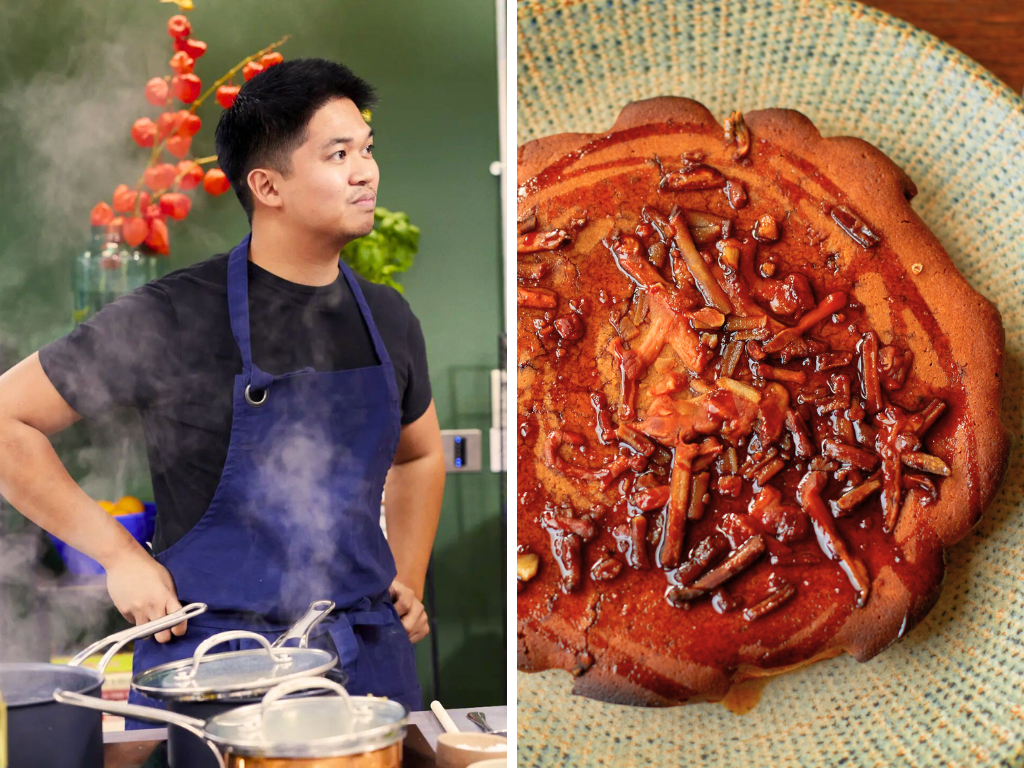
“I’m Rex, a Filipino chef and founder of Turo Turo Filipino Bar & Grill in London. My work focuses on showcasing Filipino food through bold flavours, shared dining and dishes that tell personal and cultural stories—bridging tradition with modern hospitality.
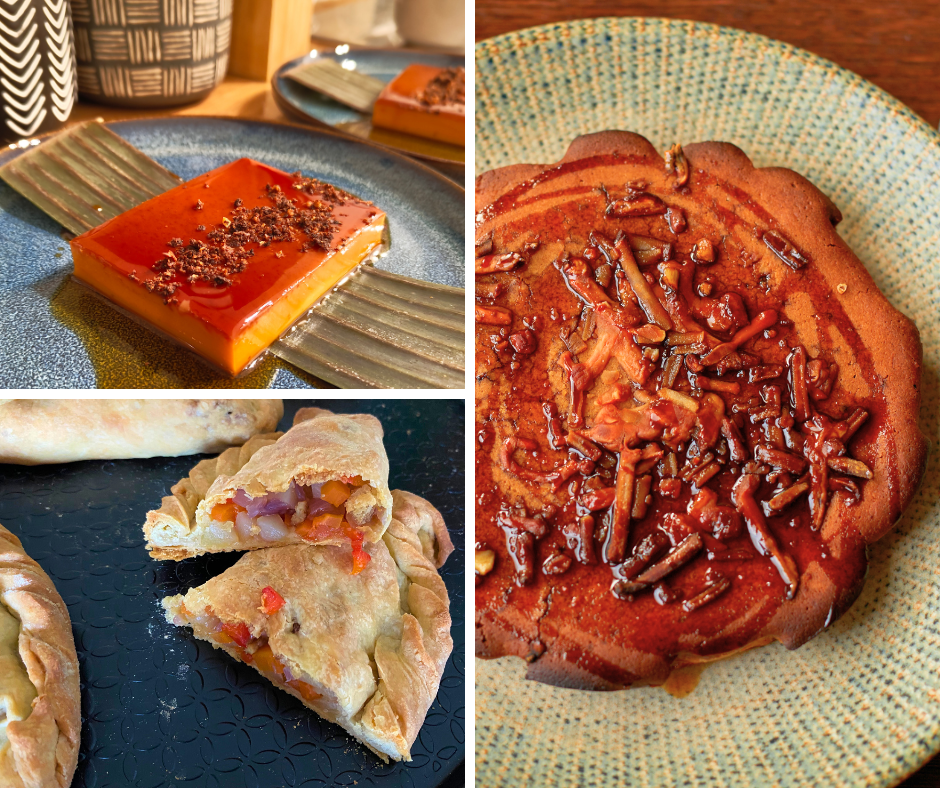
I chose Royale Bibingka because it represents indulgence at its best. It’s rich, soft and deeply comforting. It’s everything you want from a dessert meant to be shared. Unlike everyday bibingka, the royale version leans fully into decadence, with a luxurious texture that feels celebratory rather than casual.
This recipe also carries personal meaning for me. It’s something I learned from my partner, Angel Deduyo, and over time it’s become a dish I associate with warmth, generosity and togetherness. For me, that emotional connection makes it a perfect choice for Valentine’s—food that feels intimate, nostalgic and made with care.”
Recipe: Royal Bibingka – Glutinous Rice Cake
Ingredients
2 Whole eggs
175g Caster sugar
390g Coconut milk
45g Melted butter
210g Glutinous rice flour, sifted
50g Self-raising flour, sifted
Table Salt
100g Mild Cheddar cheese, grated
Method
- In a medium-sized mixing bowl, whisk the eggs and sugar until pale and fluffy for about 5 minutes. Gradually add the coconut milk and melted butter, and whisk together.
- Meanwhile, sift and combine the self-raising flour and glutinous rice flour. Add the salt.
- Add dry ingredients and combine well together to form the bibingka batter.
- Quickly heat the banana leaves over an open flame until the oil starts to shine through. Be careful not to burn. (optional) – OR make a Cartouche with greaseproof paper.
- Fill the skillet pans with about 200g of Bibingka mix.
- Bake in a preheated oven at 190°C for approx 18-20 minutes until the top starts to brown and is almost cooked.
- Top each bibingka with a good sprinkle of grated cheddar cheese.
- Bake for a further 5-8 minutes until just set, and the cheese is well melted.
- When cooked, remove the bibingka from the oven. Using a skewer, lightly poke holes around each bibingka.
- Meanwhile, in a pan, melt and boil together the unsalted butter with caster sugar, then brush and glaze each individual bibingka
- Allow to cool at room temperature.
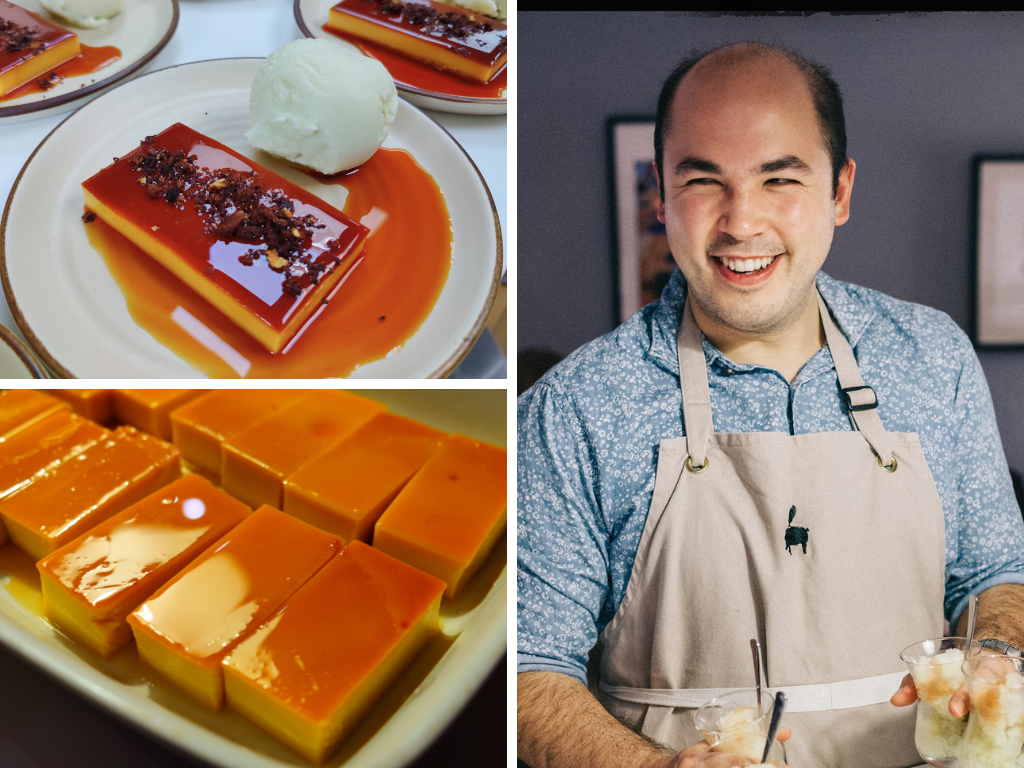
“I’m Mark Corbyn, the chef behind The Adobros, a Filipino catering company doing everything from private dinners to weddings, in London and across the country. When not in the kitchen, I love spending time with my wife, daughter and dog, and also write about Filipino food and culinary culture on my Substack, For the Love of Adobo.
Leche flan is one of my wife’s favourite desserts. So when I told her that I wanted to develop a recipe for The Adobros, she was very excited – but also very keen to taste test and ensure that I did a good job. I think I went through about four iterations before she was happy with the result, and now she always asks me to make extra whenever I have an order for leche flan. And indeed, I will be making it for her this Valentine’s weekend!”
Recipe: Leche Flan
Makes 1x 2lb loaf tin or regular-sized llanera (good for 3-4 servings)
Ingredients
For caramel
60g Sugar
15ml Water
For leche flan
5 Egg yolks
1 Egg white
198.5g (½ can) Condensed milk
205g (½ can) Evaporated milk
¼ tsp Vanilla extract or pandan extract
Method
- Put the sugar in a small saucepan, then add the water. Wait until the sugar is fully hydrated.
- Heat the sugar mixture on high, taking care not to stir it. Watch it carefully until it starts to brown at the edges – at this point, start to gently swirl it and allow the mixture to caramelise.
- Once a dark golden brown colour and starting to smoke, take off the heat and immediately pour into the loaf tin or llanera, taking care to spread it evenly. You can bang the tin on the counter, to help disperse any bubbles. Leave to cool.
- Mix the egg yolks, egg whites, vanilla/pandan extract, condensed milk and evaporated milk in a bowl, stirring vigorously with a spatula to mix well (without incorporating too much air).
- Strain the custard mix into another bowl through a sieve, to remove air bubbles as well as to further mix everything.
- Stir the custard mix a few times, then strain again into another bowl through a sieve, to further remove air bubbles and encourage smoothness.
- Strain the custard mix a third and final time into the tin with the caramel base.
- Heat the oven to 175c.
- Cover the custard mix tray tightly with tin foil. Place the tray into a larger oven tray; add water to the oven tray until it is about halfway up the side of the custard mix tin.
- Bake in the oven for at least 40 minutes.
- Once 40 minutes is done, check the flan; if it has a solid-ish wiggle in the middle, it is done. If not, cover again and bake for another 5 minutes. Once ready, take out the oven, remove the foil and then leave to cool completely.
- Run a knife around the edge of the leche flan. Flip the tray onto another tray; the leche flan should come out, and the caramel over it too.
- Portion up and serve.
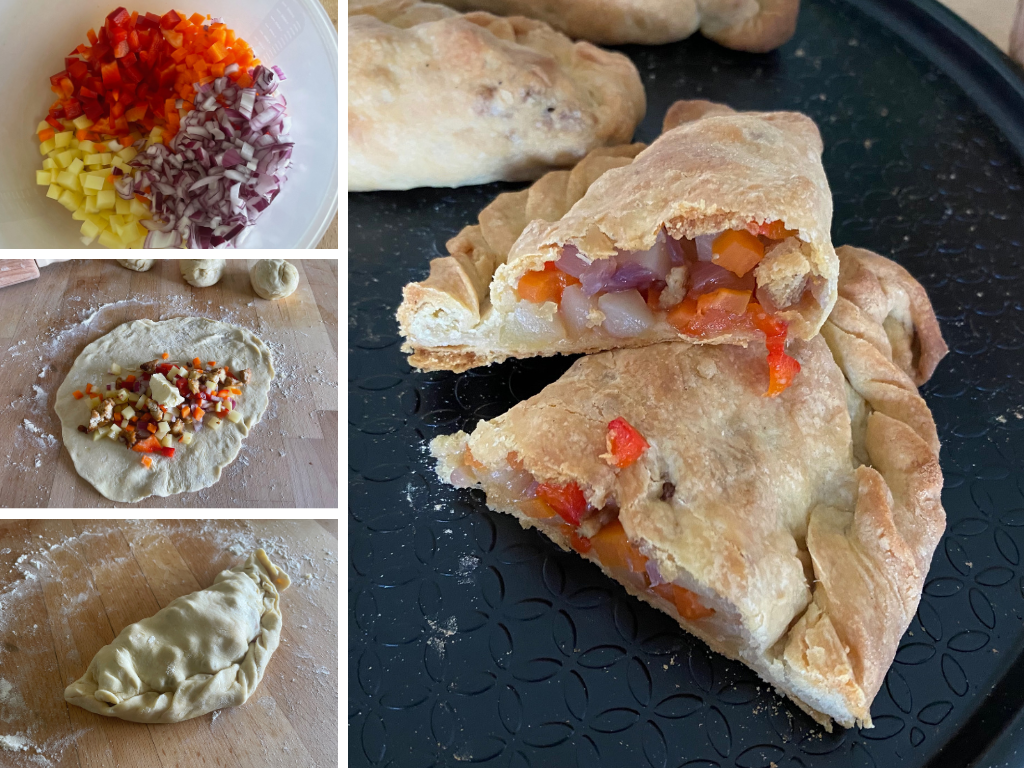
Here’s a recipe that my husband and I love to make for special weekends or to take with us on a long hike with our dog.
What is the difference between empanadas and pasties? Well, it seems to be mostly cultural. Both offer a combination of shortcrust pastry and delicious savoury fillings of meat, onions and vegetables. However, the empanada comes from Northern Spain and the pasty from South West England, which are not a million miles away from each other.
The real origin of the dish is hard to pinpoint, and most cultures have a variation on this humble folded pie. The recipe probably originated in the Middle East and was brought by Spanish settlers to Latin America and the Philippines.
This is a vegan version of the classic recipe, but feel free to replace the tofu with ground meat if you prefer. We will oven-bake these savoury pastries rather than deep-frying them, but the results will still be delicious.
One of the best things about this recipe is how it doesn’t require any expensive or hard-to-find ingredients. It will make four medium-sized empanadas, but feel free to double the ingredients and prepare more if you like.
Recipe: Vegan Empanadas / Pinoy Pasties
Ingredients
For the dough:
200g All-purpose flour (known as plain flour here in the UK)
100g vegan margarine, butter or any baking fat
Pinch of salt
2 Tablespoons of water
For the filling:
¼ red bell pepper
1 medium potato
1 medium carrot
1 medium onion
180g block of tofu
1 tablespoon soy sauce
A dash of pepper (white or black)
A quarter teaspoon of margarine for each pastry
Making the dough
First, we’ll mix up our dough ingredients. It’s actually better to make the pastry in advance and leave it in the fridge, which makes it easier to work with.
- Weigh the flour and margarine into a bowl, then rub the margarine into the flour until it looks like breadcrumbs.
- Add a pinch of salt to the mixture. You can leave this out if you are using salted margarine or butter and prefer less salt.
- Add two tablespoons of water and stir with a silicon spatula or wooden spoon until the mixture forms a tight ball. This shouldn’t take too long, but if the mixture remains crumbly, add a little more water. Try not to knead or squash the dough too much, as this will make it chewy and bread-like.
- When your dough is prepared, put it in a container and leave it in the fridge until ready to use.
Making the filling
- Dice the potato, onion, bell pepper and carrot into small cubes, then combine them in a bowl, making sure they are evenly mixed.
- In a bowl, crumble the tofu into small chunks and stir in the soy sauce. Heat a teaspoon of oil in a pan and fry the tofu on a medium heat for around five minutes, or until the edges are crispy and the texture is chewy.
- Leave them to cool.
Making the empanadas
- Season the potato, onion, carrot and bell pepper mixture with a little salt and pepper. White pepper is really good in empanadas, but if you don’t have it, just use black pepper. Add the fried tofu to this mixture and stir it well.
- Heat your oven to 180°C and prepare a baking tray to place your empanadas on.
- Shaping the dough is the trickiest bit about making empanadas, but it’s also the most fun. I usually cut the dough ball into four even quarters, then roll them into balls.
- At this point, it’s important not to touch the dough too much because the heat from your hands will melt the margarine and make the dough sticky. Just spread a little flour on your counter, take one of the dough balls and squash it flat with your palm.
- Using a rolling pin (or the edge of a glass bottle), roll the dough ball into a circle about 5 mm thick. It doesn’t need to be perfect, but feel free to use a small plate to cut around if you find it easier.
- Spoon a quarter of your vegetable and tofu mixture into the middle of the dough, leaving at least 1 to 2 cm space at the edge. Put a quarter teaspoon of margarine on top. This will help the vegetables cook inside the empanada.
- Finally, fold one half over on top of the other and seal by crimping along the edge with a fork, or rolling the edge over as I have.
- Place on your baking tray and cook in the middle of the oven for around 30 minutes.
Make the day special by preparing bibingka and leche flan like a proper chef, baking our vegan empanadas (Pinoy pasties), or enjoying a meal out.
After all, Filipinos always find a way to make any day a special day – as long as there’s good food and good company!