By Juliana Pamiloza
The August sun sailed away and September has arrived with the promise of a fresh slate and, for many Filipinos, the festive “ber months”. This month intends to celebrate and shed light on the diverse range of nations, cultures, identities and languages of the East and Southeast Asian (ESEA) region.
Since ESEA Heritage Month is not officially recognised by the UK government, it is more crucial than ever to inform our communities of the organisations that are available to support and uplift them, be it through migrant associations, community workshops, speaker events or cultural exhibitions.
In this article, we highlight two ESEA organisations: besea.n and esea contemporary, whose names are all in lowercase. The lack of capitalisation manifests their refusal to conform to social norms that restrict and suppress self-expression.
The importance of be[ing]sea.n
The trailblazer of ESEA Heritage Month, Britain’s East and South East Asian Network, cleverly shortened to besea.n, is an organisation driven by volunteers and fuelled by the ESEA community.
The founders began their work by creating a petition against media bias in depicting East and Southeast Asians during the Covid-19 pandemic. It reached over 10,000 signatories and led to MP Sarah Owen voicing public outcry in Parliament.
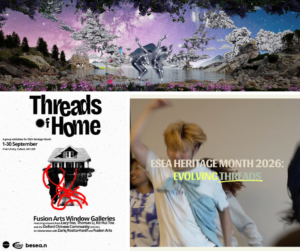
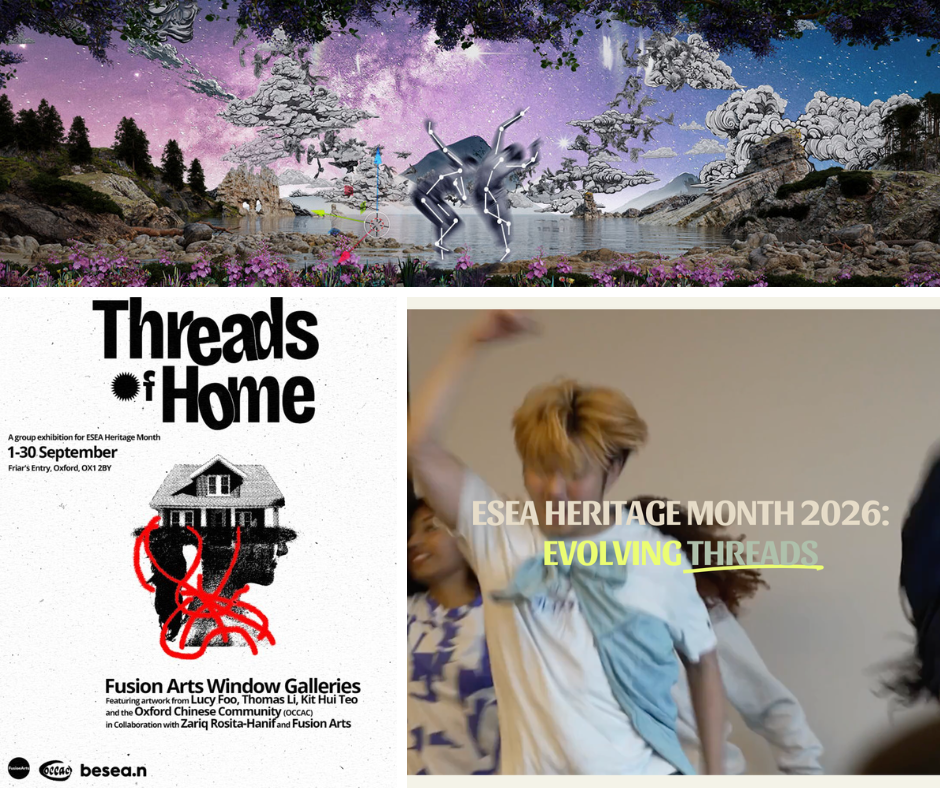
The organisation aims to raise awareness about the different activities and challenges of ESEA communities in Britain as well as build meaningful connections across different groups to promote solidarity. This year, besea.n invites everyone to reflect on the them “Evolving Threads” to mark ESEA Heritage Month. The title immediately evokes an image of generations of communities weaving together, forming an inextricable bond.
This concept encapsulates the experience of migrants from the ESEA diaspora: while we seek out a new community in order to settle into an unfamiliar environment, we will always long for our roots and the ancestors that sustained them.
Understanding one’s heritage does not stagnate growth but rather, as “evolving” suggests, makes one become informed and shaped by those who paved the way for the wider collective, and inspire for a future of greater hope and ambition.
Events neatly threaded together
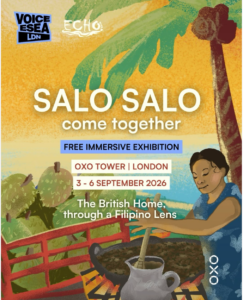
Having enjoyed Voice ESEA’s SALO SALO exhibition earlier in the month and more recently, celebrASIA, London’s largest Southeast Asian festival, there are more events across the UK that are threaded neatly together.
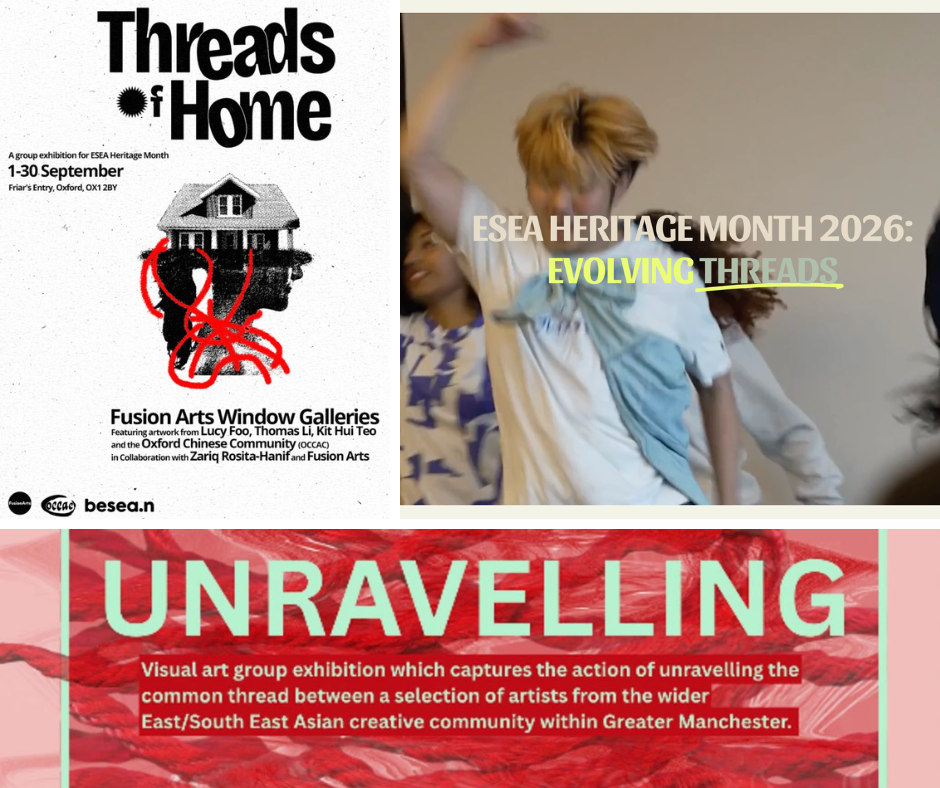
Visit the running themed exhibitions, Threads of Home and Critical Threads in Oxford, and Unravelling in Manchester.
A key event is the online Active Bystander Training on 22 September, which will share techniques to prevent or reduce harm in case you witness prejudice, harassment or abuse.
A barbeque fundraiser for ESEACC luncheon club and medical aid for Palestinians will take place on 19 September.
Embark on a diasporic voyage
Speaking of the past, Manchester is home to one of the largest East Asian populations in the UK. Its history is rooted in industry, migration and resistance, and has become woven into the experience of ESEA communities for decades.
Based in Manchester, esea contemporary is UK’s only non-profit art centre that amplifies ESEA artists and art practices. It primarily desires to generate complex conversations on identity and combat social norms through art.
In her director’s letter, Xiaowen Zhu outlines that the organisation aims to bolster artistic voices who “invite us to navigate shifting terrains, where opposites blur, categories dissolve, and ritual and rupture coalesce.
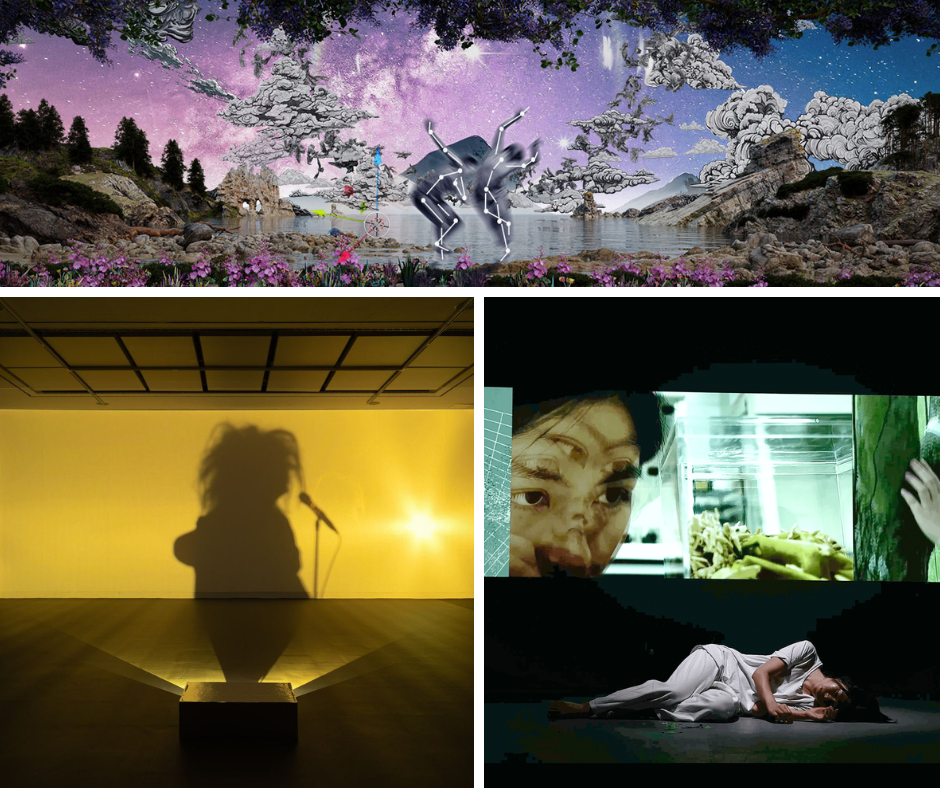
Through its exhibitions and workshops, the organisation reveals its fearlessness in sitting with uncomfortable and unsettling narratives, which provides a more nuanced image of the ESEA identity and the challenges that come with it.
One of its events this month was an exhibition called Chris Zhongtian Yuan: Two Improvisations, which highlighted the Yěrén (野人), an elusive ape-man who is believed to reside in the mountainous forests of Hubei Province. Born in Wuhan, London-based artist and filmmaker Yuan works across different mediums, from video to sculpture, resisting definition and welcomes uncertainty.
On 20 September, the centre will feature Donald Shek’s Dance With Me: Digital Bodies, Living Memories. It involves an immersive workshop that navigates breathing life into art through 3D scanning and AI motion capture, transforming the individual experience into a choreography of collective narratives.
On 22 September, interdisciplinary artist Hiền Hoàng will lead an online reading performance and discussion on How to Touch the Elephant: Ecological Trauma in Post-Agent Orange Landscapes of Vietnam. Hoàng emphasises the ever-present remains of war and its psychological effect on its survivors, who will never be able to surpass the physical and metaphorical stain of trauma.
Make a long-lasting difference
We encourage our ESEA community and friends to not only participate in the events of this heritage month, but to contribute and boost the plethora of organisations who are committed to making a long-lasting difference on the lives of migrant communities.
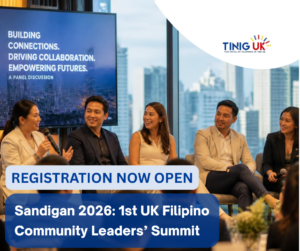
After taking part in the ESEA Heritage Month events, make sure to attend Tinig UK’s upcoming anniversary event, Sandigan 2026: UK Filipino Community Leaders Summit on 10 October. Let’s celebrate Tinig UK’s 6th Anniversary, as we seek to create a community-driven gathering that is rooted in connection and collaboration, rather than commercialisation.
There will be a panel and workshops by the UK’s finest Filipino British leaders and organisations, alongside an opportunity for a casual networking over a meal. Tara na (Let’s go)!
About the author
Juliana Pamiloza
Juliana Pamiloza is a Filipino British daughter of first-generation immigrants. She is a graduate from St Anne’s College, University of Oxford, where she read her BA in English and Spanish. Her love of writing began from a young age, becoming a published writer for her local Guardian under the Young Reporter Scheme. During her time at Oxford, she developed her passion as a writer and editor for The Oxford Blue and The Oxford Linguist, and wrote articles as an intern for Press Gazette. Her writing is rooted in female empowerment, identity and belonging.