By Naomi Edge
A documentary about delivering food supplies to remote military outposts in the West Philippine Sea might not seem controversial at first glance. Yet the Chinese government appears to think otherwise: it has blocked screenings of the film Food Delivery in New Zealand, Switzerland, and several other countries.
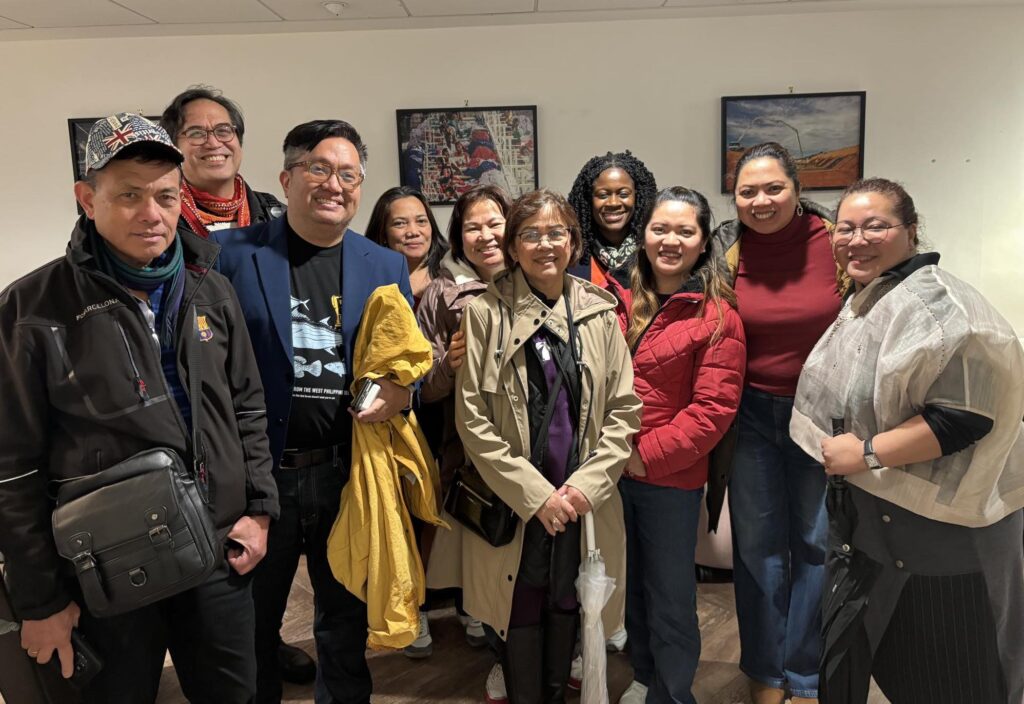
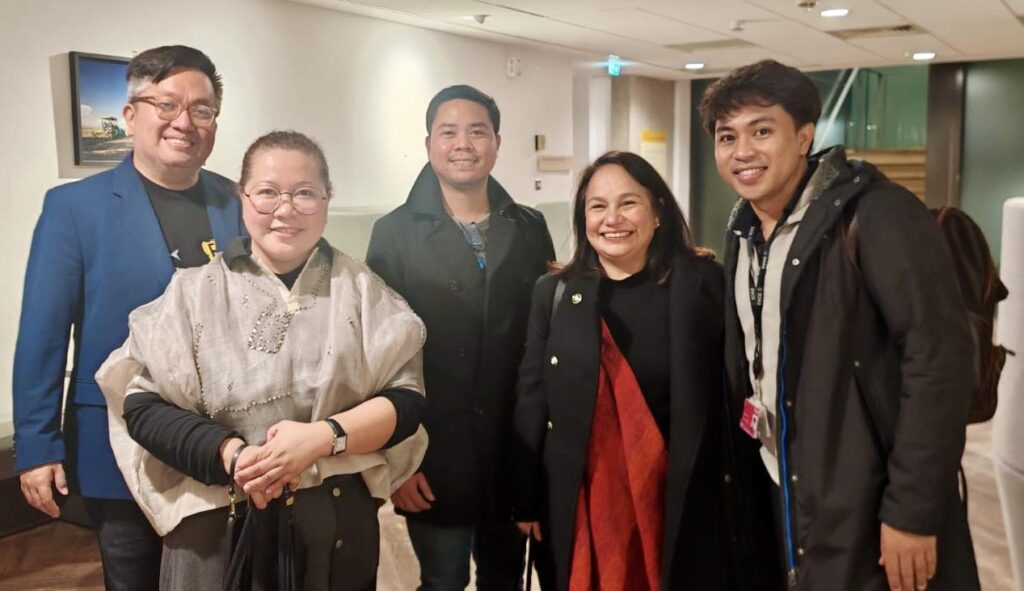
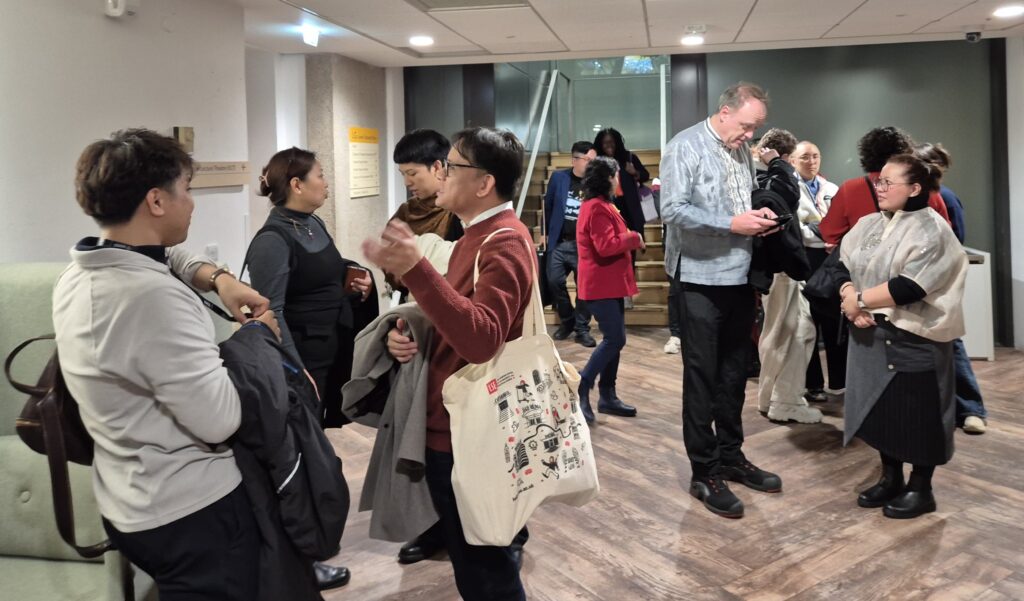
Even in the Philippines, the film was pulled out two days before its debut at the CinePanalo Film Festival, an event funded by the supermarket chain Puregold. Some cinemas have also declined to show the film, according to film director Baby Ruth Villarama. That is precisely what makes community screenings, particularly those outside the Philippines, so significant. On 6 December, the School of Oriental and African Studies (SOAS), University of London, hosted the UK premiere of Food Delivery, with Ms Villarama and producer Chuck Gutierrez in attendance. The screening was organised by Dr Cristina Juan, head of the Philippine Studies programme at SOAS.
The film was also screened on 10 December at Rich Mix in Shoreditch.
The human stories behind a maritime dispute
Food Delivery documents the escalating tensions between China and the Philippines in the West Philippine Sea and the impact of that dispute on Filipino fishers who increasingly find themselves on the front line of a geopolitical conflict. Both countries claim ownership of the waters, despite a 2016 ruling by the Permanent Court of Arbitration in The Hague that rejected China’s expansive claims and affirmed the Philippines’ rights.
The West Philippine Sea is a vital trade route and a mineral-rich fishing ground that provides livelihoods for more than 1.8 million Filipinos. Yet, despite its strategic and economic importance, the dispute has received relatively limited attention in Western media.
“When we entered the story, we’re coming from the geopolitical viewpoint, based on the news that we’ve witnessed, but when we immersed ourselves within the community then we discovered how personal the story of the West Philippine Sea is and how human it is and how we are related to it, how we are connected to it,” Ms Villarama said during the Q&A after the screening.
As tensions intensified, Villarama and her team felt compelled to move beyond observation. “There came a point when we needed to stop being spectators and pick up our cameras and activate our own curiosity and figure out, ‘What is going on?’ We went to the area and met with a few of the fisherfolk, and discovered the lived experience of how they’re being harassed and how bountiful and beautiful and essential the West Philippine Sea is to the community and to the entire Philippines,” she said.
A collective story that demands attention
The film captures the multiple pressures facing Filipino fishers: intimidation by the Chinese Coast Guard, dangerous working conditions at sea, and policies closer to home that further undermine their livelihoods. Fishers are routinely prevented from accessing Scarborough Shoal, a traditional fishing ground, by Chinese patrols. In one scene, a fisherman is forced to retreat as Chinese vessels with armed guards close in.
At the same time, local fishers struggle to compete with cheap imported frozen fish, a policy supported by the Philippine government. After hours battling rough waters, their fresh catch fetches little in local markets.
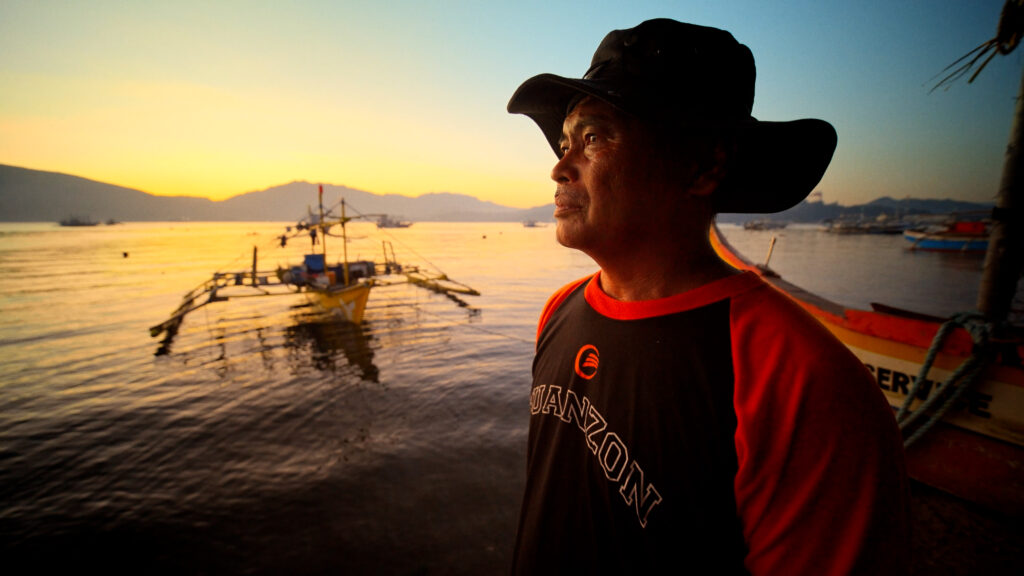
“We fish just to have food for our family, that’s enough for us,” one fisherman says, exhaustion and frustration etched across his face.
The post-screening discussion was moderated by Dr Roderick Galam, senior lecturer in sociology at Oxford Brookes University. He described Food Delivery as a response to a long-standing challenge raised by Filipino scholars.
“How could we go beyond anger when we talk about what is happening in the West Philippine Sea? How could the issue be linked more with the lives of Filipinos?” he asked.
He told Tinig UK: Food Delivery highlights not only issues of national sovereignty and security but also how the lives of millions of ordinary Filipinos are threatened by China’s actions (and the collaboration of past presidents). It is a film that could be used to teach Filipino children and students about many social and environmental issues and that simultaneously enables us to generate further critical conversations about (what is happening in) the West Philippine Sea.”
Resonance beyond the Philippines
Audience members reflected on the film’s wider implications. Malcolm Conlan, a British social media influencer and supporter of former president Rodrigo Duterte and current president Ferdinand Marcos Jr, said he was concerned about the broader consequences of escalating tensions.
“There are overseas Filipino workers all over China,” he said. “If the situation worsens, that could affect them. This film is an opportunity to see what Filipino fishermen are experiencing from the inside.”
For Villarama, the project deepened her respect for fishing communities, where women have taken to the sea themselves to support their families. “It’s not a third-person story,” she said. “It’s our collective story. Protecting them means protecting our future.”
Her closing message extended beyond the West Philippine Sea. “Protect what you have before somebody else takes it from you,” she told the audience. “Appreciate the democracy and freedom you have, and don’t allow external forces to influence your path to freedom. Democracy is a gift that we enjoy and we have to protect it.”
Despite efforts by the Chinese Embassy, and “external forces” in the Philippines, to block screenings across multiple countries, each showing of Food Delivery has become an act of quiet resistance. As audiences left SOAS and stepped into the London evening, they carried with them not just an understanding of a distant territorial dispute, but a reminder that sovereignty, livelihoods, and democratic freedoms — like the waters of Scarborough Shoal — must be vigilantly defended, or risk being claimed by those with greater power.
About the author

Working in digital marketing, Naomi is a Filipino-British who is passionate about design and writing. She has previously worked with the British Council, Birmingham Arts Council and Wilderness Festival on a variety of fundraising and awareness events, including the “Birmingham Weekender” and “The Janus Project.” You can follower her on Twitter @nomderland