
Social events go beyond meeting Filipinos’ need to be with others to relax and converse in Filipino. These gatherings provide vital emotional support, professional networking and a bridge to philanthropic work back home.
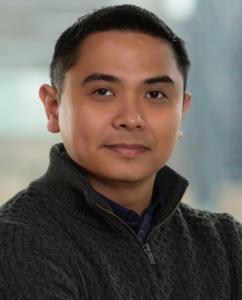
According to Chris, UPAA hosts a popular monthly “tambay session” (hangout session) in London where members meet for dinner and drinks after work during the week. Chris says these meet-ups serve as an essential de-stressing activity.
“It’s hard to complain about your boss (at work). It’s hard to speak in English when you’re frustrated,” Chris explains. “You join if you just want someone to listen to you. No judgment.”
In contrast to traditional, multi-generational Filcom groups, this community primarily attracts single professionals and graduate scholars. Chris informally leads its 400-member WhatsApp community, a decentralised hub where members can create channels for topics like sports, investing, jobs, and day trips.
Also known as Gloucestershire Pinoys, Filipino Association of Gloucestershire (FAG) shows how members want to connect with non-Filipinos in the county. It serves as an umbrella organisation for all smaller Filipino groups in the county.
FAG chairperon Raymond Padilla, 55, says that the group may be the oldest Filcom group outside of London. Founded in 1981, it has around 3,000 members with no formal registration required for membership.
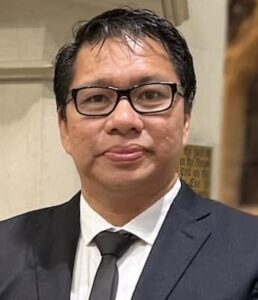 Raymond explains that instances of illness or bereavement are handled on a case-by-case basis to ensure privacy. “Offering help to people needs to be done in a sensitive way,” he notes. “During Covid, we knew who were affected, but when we visited them, they didn’t want to acknowledge they had it, perhaps because of the stigma attached to it at that time.”
While internal community support is vital, Padilla — ward manager at the Worcester Royal Hospital and former town councillor — is a firm believer in building relationships with the wider British public. For the past three years, the organisation has hosted Filipino Heritage Day in Gloucester’s public square to foster connection.
“We need to co-exist with others, we need to integrate. We have to be seen ‘cos if we don’t integrate, we will always be excluded,” Raymond stresses.
“It’s also important to nurture your relationship with the Philippine Embassy. They have been to Gloucester for consular outreach three times already. They need partners on the ground to help with their work,” he says.
Chloe Masilungan, 45, president of Batangas Association and waiting list manager at Great Ormond Street Hospital, notes that members join the group because they want to continue having a connection with their hometown in the Philippines.
“They see the projects that we do, so they know they are helping. Some join because of socialising especially if they have not been in the UK for a long time. It is also nice for them to meet other people from Batangas.”
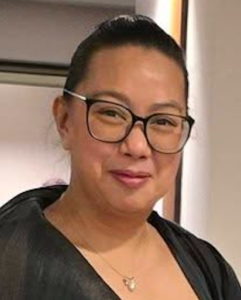 Founded in 1993 by Chloe’s dad, Julian “Jun” Masilungan, Batangas Association has some 300 registered members who come from the province of Batangas in southern Luzon.
While the majority of members are between their 40s and 70s, the group is highly involved in philanthropy. Their projects include funding allowances for college students in Batangas, distributing Christmas hampers for selected towns and supporting an elderly home in Tanauan.
Beyond company registration, our interviews confirm Filipino entrepreneurs’ need for reliable business support and guidance.
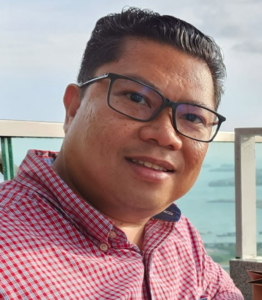 For Michael Sanchez, a 54-year-old IT and automation services owner, starting a business and registering a company in the UK has proved relatively straightforward. However, he says that day-to-day operations present unique obstacles, noting that sales and marketing prove far more demanding than the initial setup.
“I had to do my own research when it came to sales and marketing. What would be helpful for me are articles on how to grow my business.” He is also considering going into UK-Philippines import-export business in the future and says he would like guidance on this.
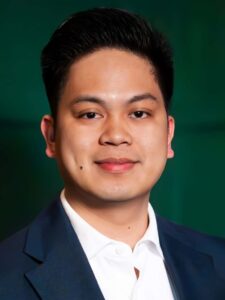 Mervin Dave Miguel, 32, director of the restaurant chain D’Cocina, shares that after two years of running their business, they realised they needed expert advice on scaling it as a franchise.
“We spoke with connections in a similar industry in the Philippines and in the UK which helped us a lot,” says Dave. Today, they have created a private network of D’Cocina investors who are also mostly business owners. Some of them are lawyers and accountants and the group has turned into a support network for running their own businesses.
“You’ll never be prepared in starting a business. The best thing to do is to start one and adapt,” Dave advises.

Entrepreneurs need guidance as they invest significant effort into understanding UK business regulations. International lawyer Aimee Alado-Blake, 55, works with big corporations as well as sole owners to establish their UK businesses and meet regulatory requirements. She stresses that time is a start-up’s most precious and scarce resource.
“Doing it on your own is like self-medication. Why do it when you can go to a doctor?” she says.
While Aimee acknowledges that expert advice can be costly for early-stage founders, she recommends Filipinos check out a few organisations that offer excellent advice and support:
Federation of Small Businesses: Provides expert advice, financial expertise and policyadvocacy.
- Small Business Britain: Organises events, nationwide campaigns and training.
- The government’s Business Department: Offers comprehensive guidance for starting, running and scaling a business.
- Enterprise Nation: Connects start-ups with essential resources, expertise and networking opportunities to fuel growth.
“Trade and law binds us all,” says Aimee, chair of the ASEAN UK Business Forum (AUBF), a non-profit organisation that aims to promote trade between Southeast Asian countries and the UK. She highlights the broader value of commercial ties, noting that trade serves as a bridge for promoting tourism, culture and cooperation.