


How do you navigate your identities when you exist between two or even three worlds? Dianna Bautista explores how young Filipino British are turning to storytelling to unpack their own lived experiences and honour their parents’ migrant journeys. Reflecting on her own experience as a Fil-Am living in the UK, Dianna examines the differences between growing up second-generation on either side of the Atlantic. Is the Filipino British story fundamentally different from the American one? Read on to find out.
By Dianna Bautista
“Am I Filipino enough?”
It’s a question that I found myself asking throughout my life as I navigate my identity — or more accurately, identities — as a second-generation mixed Filipina. The delicate balancing act of trying to stay connected to my Philippine roots while also honouring my dad’s mixed African American heritage and fitting into a Western world which often misidentified my ethnicity as various forms of Latin American complicated my sense of belonging.
When I moved from America to Germany and the UK in my late teens this feeling became more nuanced.
However, my time abroad consistently reminds me how common these complicated emotions are for the Filipino diaspora. Speaking with second-generation Filipino British continues to reveal a similar, yet nuanced, reality of having to navigate identities and the importance of making diverse Pinoy stories known to the British public and beyond.
Filipino immigrants in Britain
While up-to-date data on Filipinos in Britain are elusive, the community’s scale is undeniable. The Philippine Embassy in the UK estimates that there are some 200,000 Filipinos in Britain, represented by more than 200 organisations in the UK and Ireland registered with them. Filipinos made up the largest South East Asian population across the UK in 2011, according to data from the Foreign, Commonwealth and Development Office.
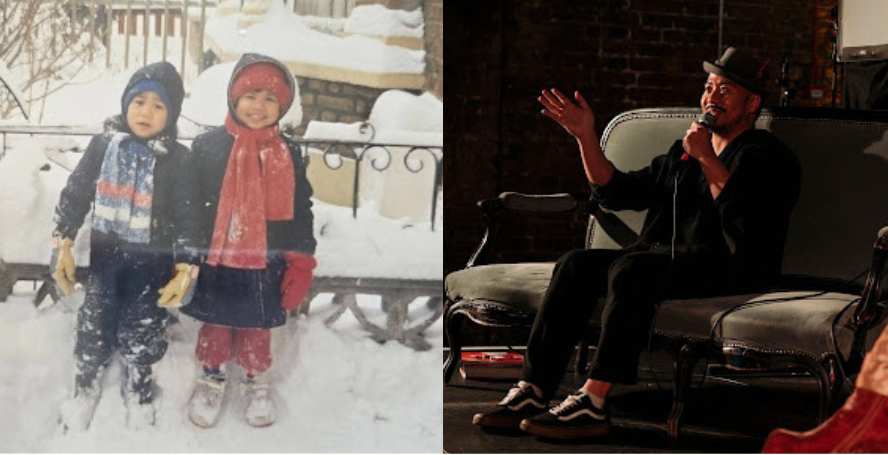
“There’s so many pockets of second generation Filipinos,” explains Chi Sandford, 27, a second generation Filipina British artist and psychotherapy student who prefers to use her nickname for this article.
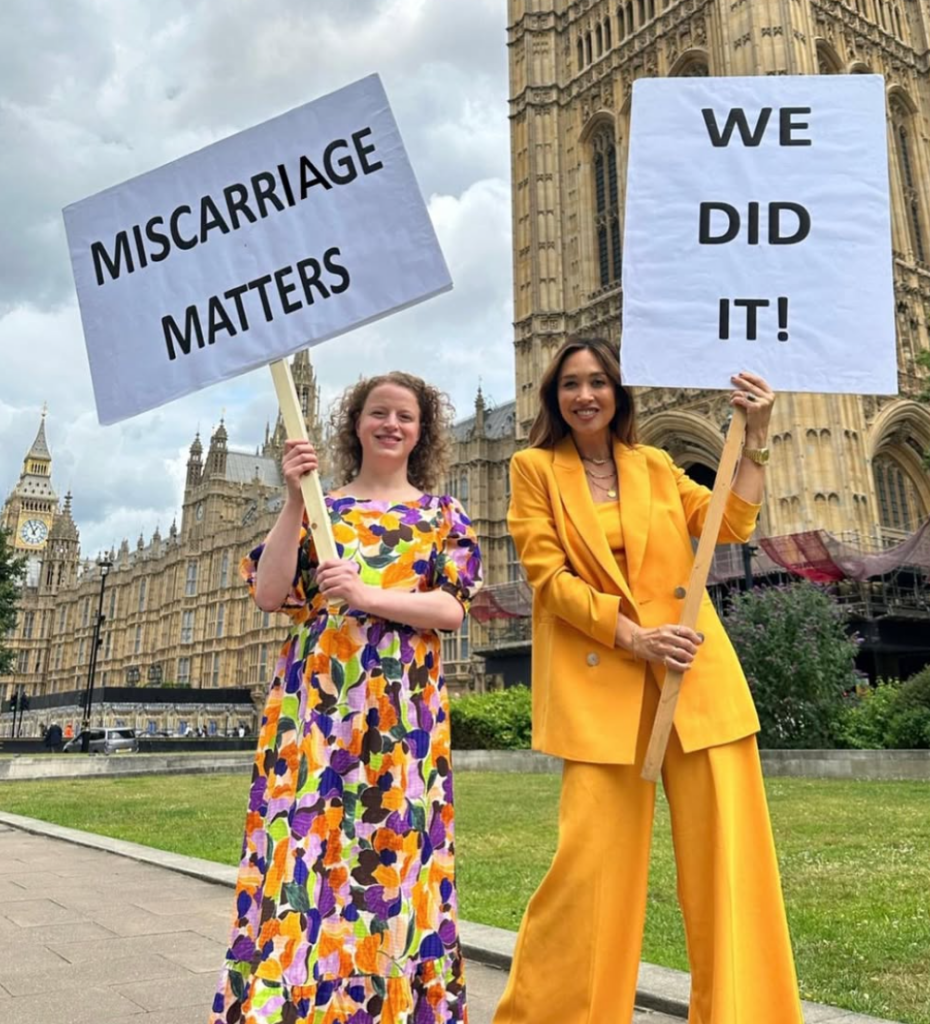
Their presence can be seen through famous faces such as Filipino French footballer Alphonse Francis Areola, the current goal keeper for West Ham, and British-born Filipina Austrian singer, presenter and campaigner Myleene Klass.
“There’s Filipino beauty pageants, there’s Filipino charities, there’s Filipino artists, producers, wherever genre. We’ve got our fingers everywhere, both in the grassroots as well as in larger organisations,” continues Chi.
Filipino American versus Filipino British representation
Moving to Germany then the UK highlighted key differences related to the Western part of my childhood as a Filipino American. What stood out most was that despite the presence of Filipinos in multiple sectors, Pinoy representation in British mainstream media and wider society is still lacking. But then again, British-born Chinese – who have longer ties with Britain – and the wider East and Southeast Asian communities share the same sentiments.
By comparison, the Fil-Am narrative is well established, reaching beyond the community and into the fabric of American society. This could be explained by the Philippines’ colonial history when it became a US colony in 1899 following the Spanish-American War. Filipinos were granted the status of US nationals, paving the way for hundreds of Filipinos to migrate to the US West Coast to work as farmworkers in the early 1900s.
Although my particular ethnic heritage was not as highly represented as a child, having Fil-Am role models likely made straddling the Eastern and Western worlds easier. I could look at the telly and see parts of my story portrayed. My interest in writing or sports were reflected in role models that went beyond the nurse stereotype. As a young competitive swimmer, that meant moments like watching the 2004 Olympics and seeing mixed Filipina athlete Natalie Coughlin win gold in the 100 backstroke.
However, the Fil-Am story does not reflect the Filipino British experience because of the distinct historical and socio-political factors that shape their migration. Despite common feelings of existing between worlds, the nuances of British culture and upbringing, experiences which shape people, are missing. For example, social issues such as classism manifest themselves differently across the Atlantic.
As such, second-generation Filipino British are now looking to make their presence known, tell their stories, and fill the void of representation.
Reclaiming their Filipino identity(ies)
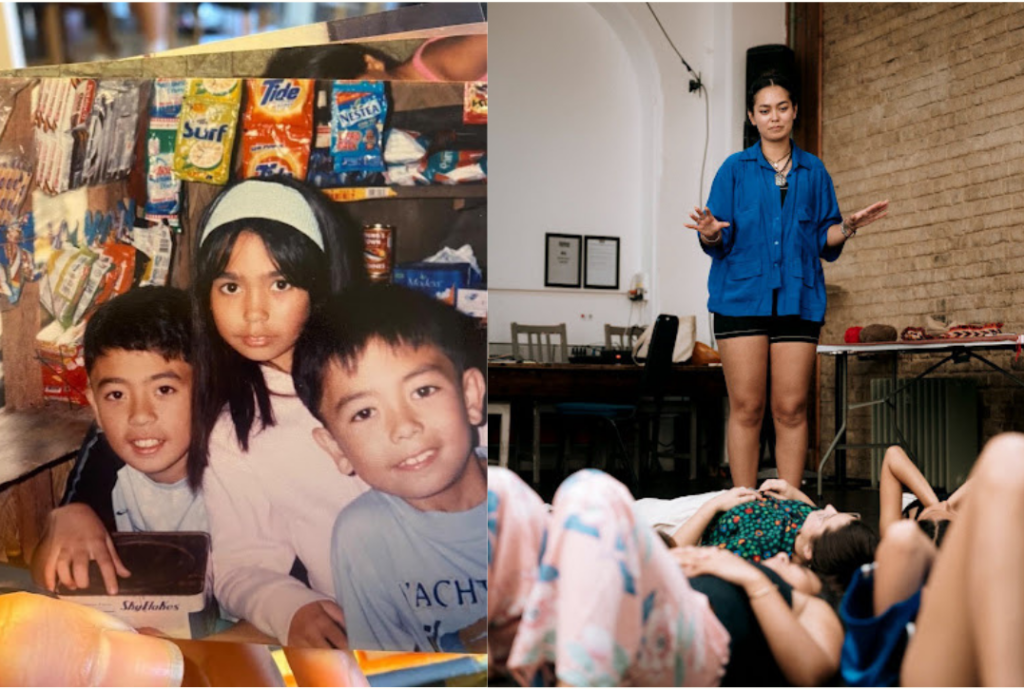
Second generation Filipino British artists Chris Reyes and Chi Sandford have different stories but they both recognise the importance of claiming their Filipino identities despite their individual story being different perhaps from other Filipino British.
“I think one of the struggles growing up as a Filipino British, and I speak more so for my family’s generation, is that when they did come here, they’re all very much on their own. They had to be able to just survive and work and raise and nurture kids in such a vulnerable environment during those times,” Chris, 39, explains.
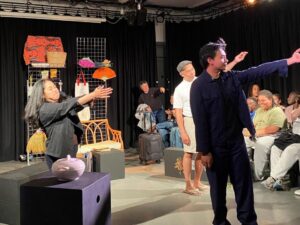
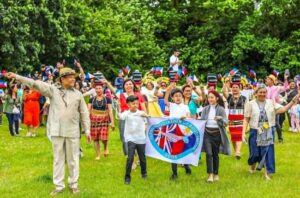
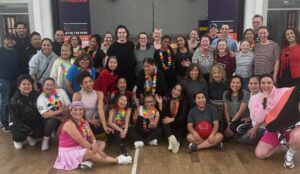
He founded Maharlika UK in 2022 to create a visible space for British society to begin to recognise Filipinos beyond their appearance, but by their stories and culture. Last November, the project held a five-day cultural takeover, featuring exhibitions, food, and Lola-led social dancing. The event, the project’s fourth wave, highlighted the importance of celebrating diverse Filipino British stories and the cultures within it.
As a dance artist and curator, Chris reflects that navigating cultural differences — and a historical lack of public understanding surrounding his heritage — played a big part in his journey toward fully accepting his Filipino identity.
“Especially those born in the UK, where many Filipino communities, including those who migrated here, are finding their own way to navigate the landscape, building experiences and legacies,” he adds.
“This to me, is part of our story. I feel now more than ever, a space for the Filipino stories and voices should be created, so we can bridge and build cultural understanding,” he ends.
Healing through storytelling
After collaborating with Chris on Maharlika UK projects, Chi is currently developing a book dedicated to the Filipino British diaspora. Funded by Arts Council England, the project has already received a heartwarming response, a testament, she says, to the deep desire within the community to share their lived experiences.
“The project has become a collective love letter…From the submissions, the team, to the collaborators – all have offered heartfelt stories that we hope can bind the book together for future journeys embarked.”
Chi’s goal is to tell authentic stories that reflect how the Filipino identity comes up in seemingly mundane moments and the nuances of the Filipino British experience.
As she explains, “I think recognising a nuance means I get to sort of create my own Filipino identity, and it doesn’t come into question. You can’t question my lived experience necessarily. Yeah, ownership is the word,” she says.
A sense of belonging
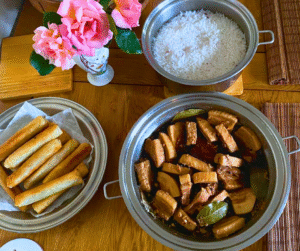
Living overseas, I learned, offers space for self-examination. It was only after moving abroad that I felt empowered to claim my Filipino identity. Perhaps it was a combination of distance and age, but moments like holding lumpia nights with flatmates or seeing ube in the local Pret, made my foreign environments feel like home. At the same time, joining the Filipino diaspora in Germany and Britain gave me a community rooted in common traits that crossed borders. In these environments, I did not have to choose between my Filipino roots and American upbringing, I was just myself.
My time abroad also happily occurs during an increase in representation of mixed Filipino-African Americans. Singer Saweetie has talked openly about her mother’s Pinoy roots. Across both the Philippines and US, Filipinos celebrated the NBA finals featuring a second-generation mixed Filipino-African American on both teams, with Jordan Clarkson and Dylan Harper playing for the New York Knicks and San Antonio Spurs respectively. The 2024 Miss Universe candidate representing the Philippines, Chelsea Manaloa, was mixed.
To answer the question “Am I Filipino enough?” well, that question is complicated and nuanced. I am also learning that immigrant or not, we have multiple, dynamic identities. But the more important point is that like Chi, Chris, and many other Pinoys living in the UK, I can own this part of my identity and tell my story, no matter how the world may see or wants to see me.
About the author
Dianna Bautista
Dianna is a Filipina American NCTJ Gold Standard Multimedia Journalist curently in London. A graduate of Jacobs University Bremen in Germany, and the University of Edinburgh in Scotland, she has lived in Germany and the UK since age 17. A former scientist and science communicator, she now works as a journalist, covering science, culture, and misinformation. Her writing has appeared in European and British media outlets. With Tinig UK, she is interested in reporting on Filipino migration stories in the UK.


