In celebration of Filipino Food Month this April, second-generation Filipino Briton Jemimah Na-oy reflects on how the flavours of her heritage have become a bridge to building friendships — a way to introduce her roots to friends from all backgrounds and create a tapestry of treasured memories.
By Jemimah Na-Oy
No doubt like other Filipino British, or any child of immigrant parents, I’ve always found it trivial to experience both cultures at the same time, almost like living a double life.
I’d have my meals at school consisting of sandwiches and tomato soup, sometimes even a roast dinner, then going home to salmon sinigang or pork adobo. I attended Filipino parties where there would be buffets every time, everyone bringing some back home in Tupperware, then attending parties in uni where it would all be drinks and stand up conversations.
It’s yet another thing that sets us apart, but food is also one of the many things that can bring wildly different cultures together. Best-selling author Faisal Hoque insists on the connection that is food, and how we as humans put ourselves into the meals that we make.
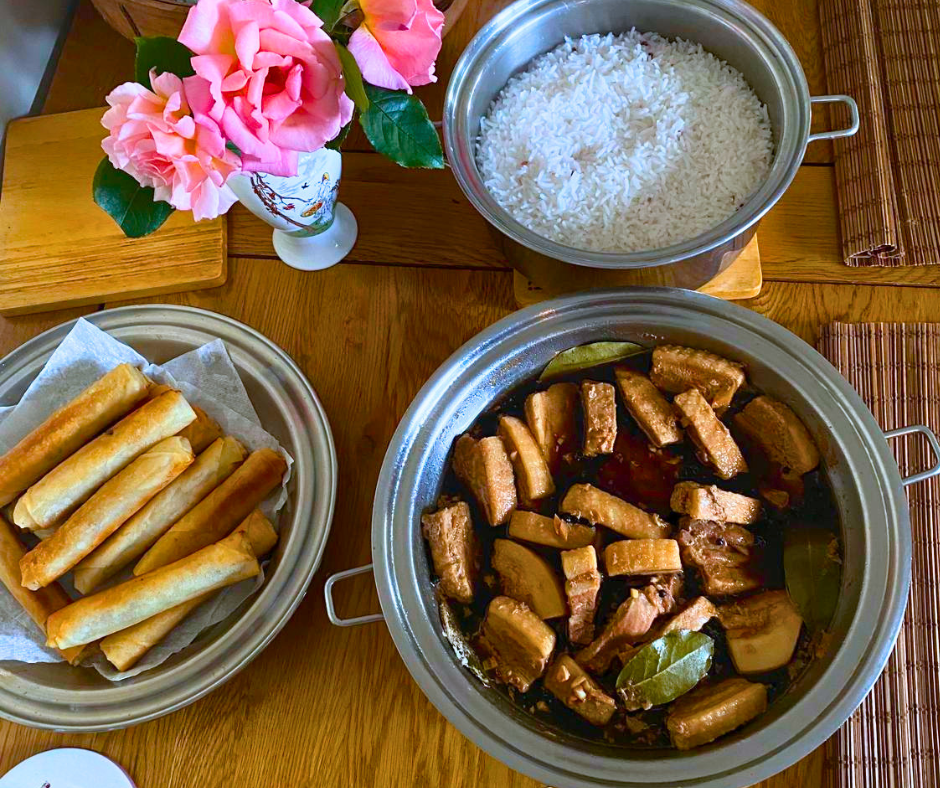
As a child, I watched my mum assemble multitudes of lumpia in preparation for a party. I was full of awe at the making of them, extremely uniform and tidy, until she eventually let me join in. It became a way for us to sit down and spend time together, just two girls preparing for a party bursting with conversations and amazing food.
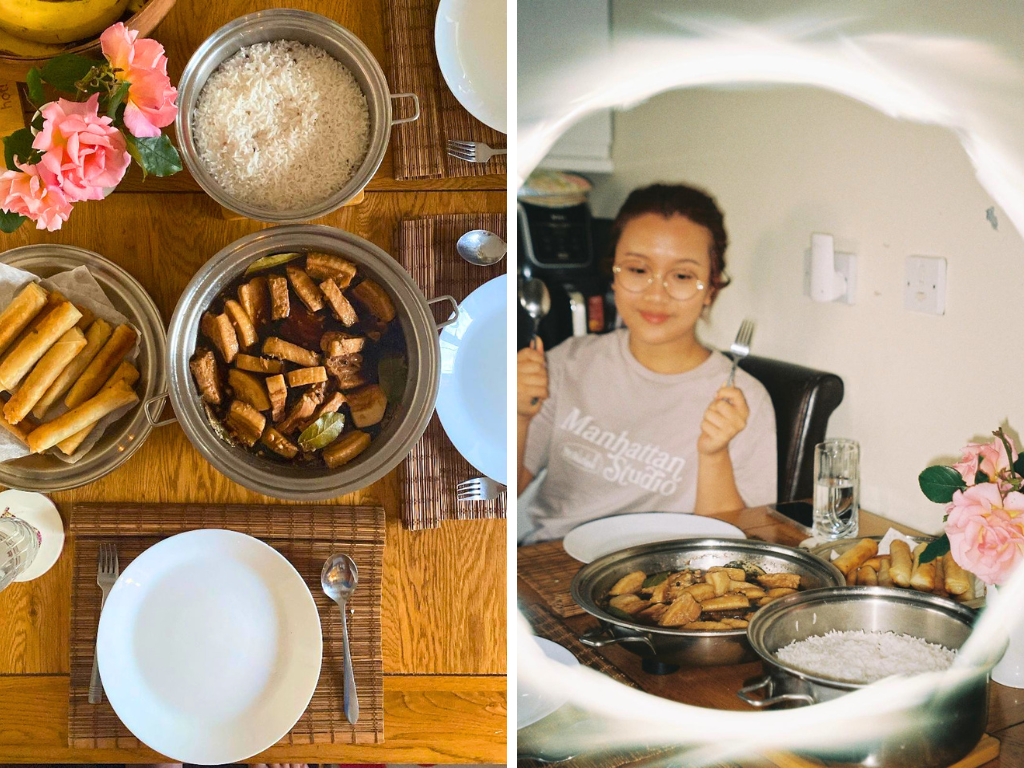
In high school, my friends and I would always find any reason to have sleepovers. They would often consist of watching movies, playing board games, making silly TikToks, but by far our favourite way to spend time was through trying new recipes, baking bread, etc. On a whim, I suggested we make lumpia as we had the wrappers in the freezer. They agreed, and we sat around my family dinner table rolling away.
Throughout this, I felt so proud sharing a longtime hobby with them, but I was also sharing my culture. It’s something we can look back on years later where we were being kids but still connected by culture. One of them pointed out how when she makes hers for her family, who are Chinese, she uses the whole wrapper to make bigger rolls rather than cutting it into fours, making smaller versions that are much more common at Filipino gatherings.
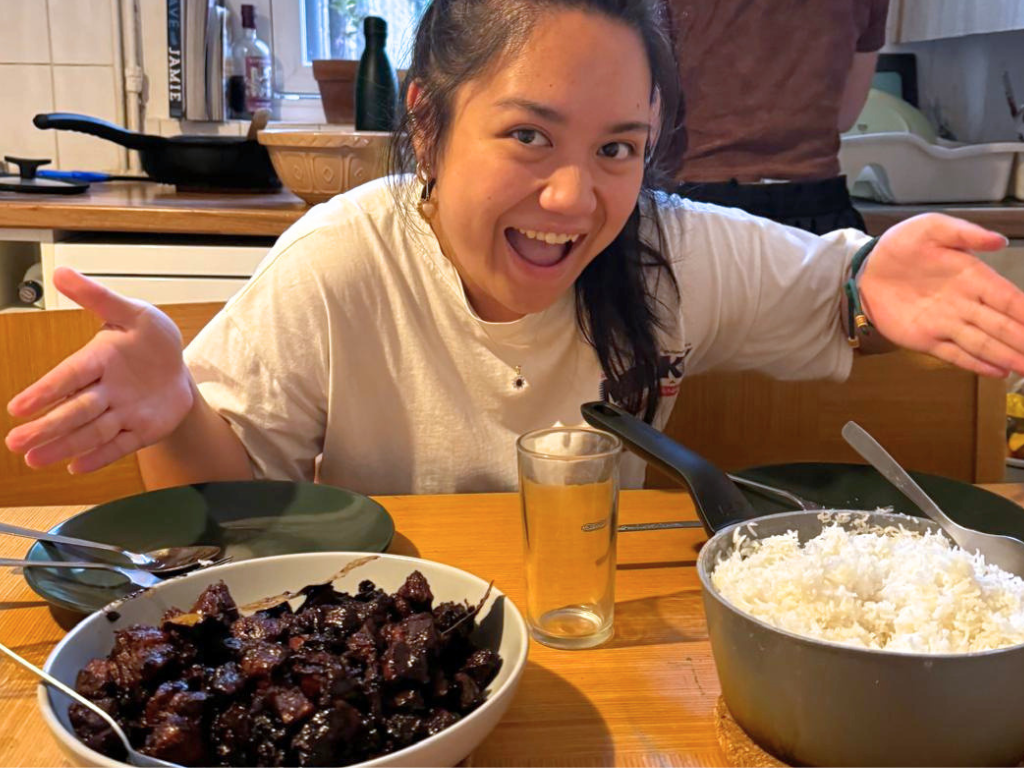
Adobo became the dish that I would use to introduce my uni friends to Filipino food, met with extravagant reactions, some of them going back for more.
Much like the lumpia making session, I felt strange yet proud seeing a dish that I almost took for granted, being such a common childhood meal, being celebrated (It even brought up a debate with my Portuguese flatmate as to which country it belonged to!).
My sister and cousin have also turned it into a household meal with their non-Filipino partners, who now know the recipes themselves.
This is yet another reason why the Cameron Diaz meme (hailing from this interview), where she lists the food she grew up with, is so funny to me.
It was almost shocking because my own childhood friends and I realised they had the same involvement with Filipino food as her. One of them said how the clip reminded her of when she had my mum’s adobo years ago and now she misses it.
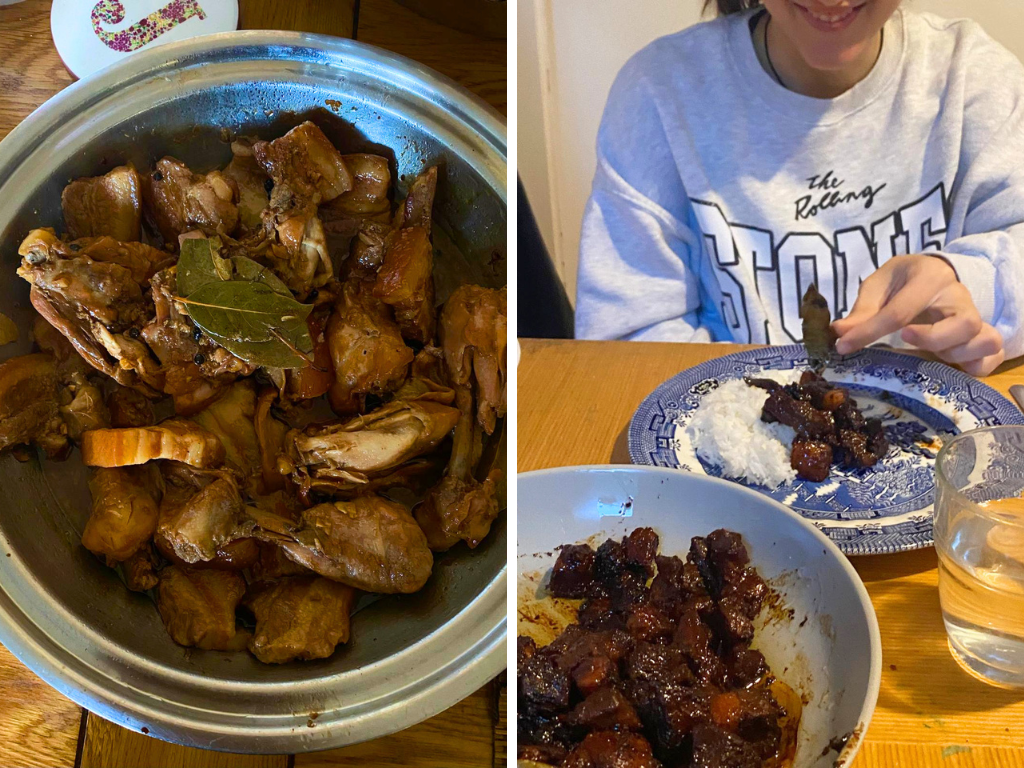
It’s bittersweet, as we’re now adults who can only really see each other once a month, but culture in the form of food is a really strong device that has allowed us to create lasting memories.
These are the memories that I can share with my friends in the UK. However, there are of course memories that can really only exist in the Philippines – stopping at the resto on the 6-hour drive from Baguio to Sagada, walking down the hill to the bakery at 6am with my cousins to collect freshly baked pandesal, a Filipino staple bread roll for breakfast.
Those are the memories that are almost impossible to recreate in the UK, where the only bakery close is a Greggs or a Sayers, selling sausage rolls and iced buns – one selling for the same price as a whole bag of pandesal.
We take where we can give, bringing bits and pieces to our UK people in forms of pasalubong (gifts for friends and family from a trip) – chicharon, polvoron, Choc Nut – but we are limited by the time and restrictions of travel (in some cases, the different food standards in each country).
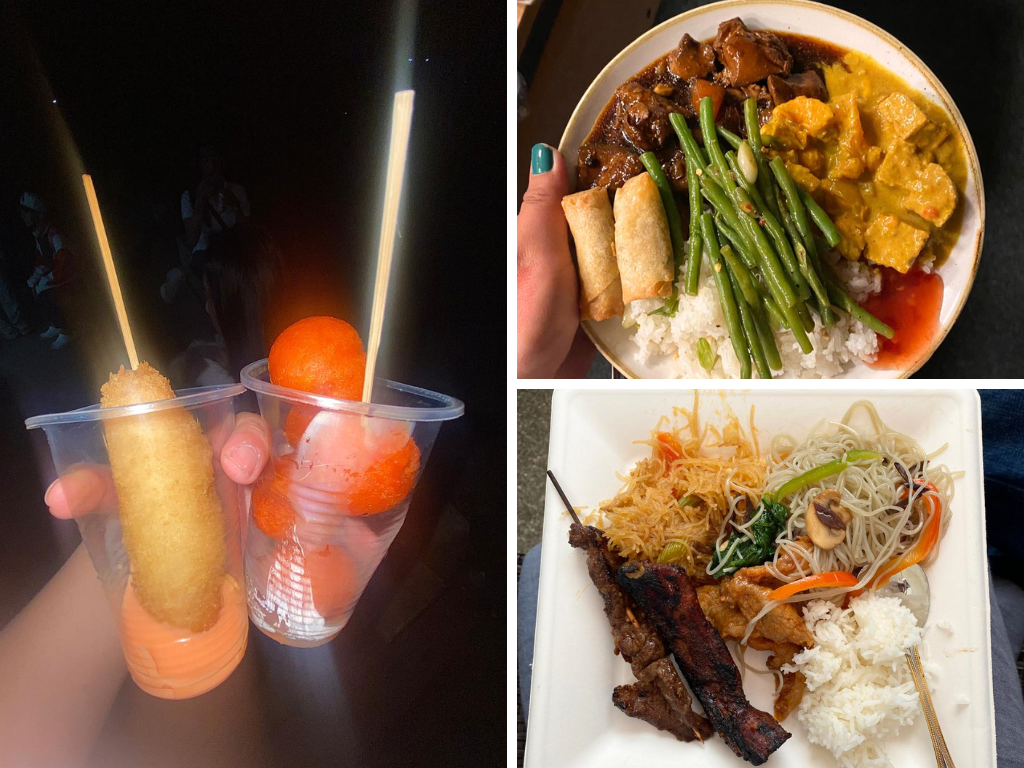
The only way we can bring Filipino food to the UK is limited by those same factors, which is why as much as I can show my friends how to make lumpia and cook them adobo, I cannot truly bring the feel and true experience of the Philippines to them.
Adobo, sinigang and lumpia to me are the ‘tamer’ Filipino foods that pass Western taste buds, the ones easiest to replicate and easiest to introduce to non-Filipinos, but can only do so much to pass the massive bridge that is between Western and Eastern cultures.
As much as this seems like a struggle, it is also a huge joy and privilege to be able to experience these two wildly different lives, and share as much of our food as we can with the people we grow up with.
About the Author

Jemimah Na-Oy
Jemimah was born and raised in Liverpool, UK, to Igorot parents. Having just finished her Neuroscience and Psychology degree at UCL, she’s eager to take a break from the lab to explore other interests and hobbies.